
CLEAN GIRLS DON’T SMOKE (AND OTHER LIES)
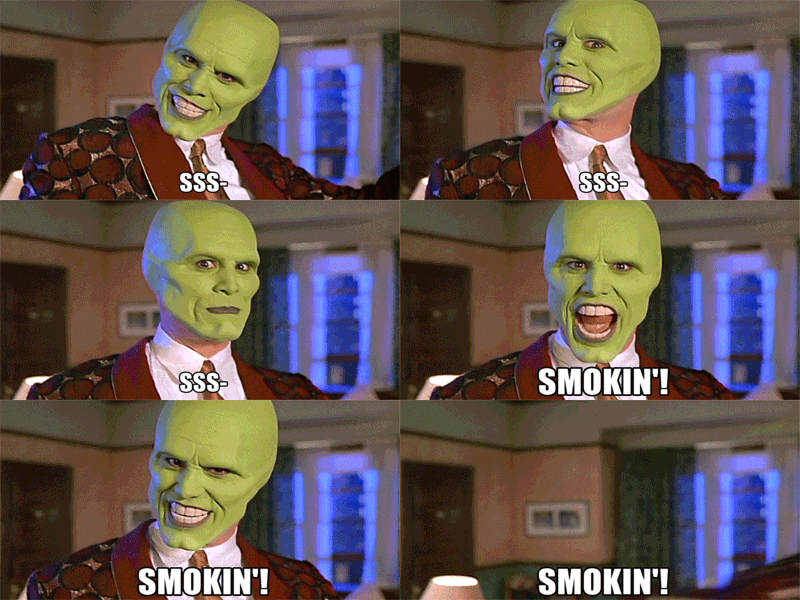
I called it at the end of last year.
Cigarettes are back - not just in people’s mouths, but in the pop-cultural frame.
From Lorde’s Instagram to Charli XCX’s wedding, And Just Like That to The Materialists, ciggies are being served on silver trays, waved down runways at fashion weeks, and featured in TikToks with bad-girl defiance. Hens parties are getting custom Bic lighters made. People are sparking up and declaring, “Urgh, vaping is sooo bad for you,” like it’s a public service announcement.
Smoking has always been shorthand for rebellion, non-conformity, power, confidence, and sensuality. And now, after years in cultural exile, we’ve pulled the old vice out of the ashtray, dusted it off, and turned it into a moment.
And…we’ve been here before.
In the 1950s, smoking signalled modernity, especially for women. It was about proclaiming adulthood, pushing back on conservative norms, and stepping into a kind of grown up self-possession exhibited by Hollywood’s coolest icons.
It looked glamorous, but more importantly it symbolised freedom and autonomy.
Fast forward to 2025, and we're watching history rhyme. Smoking is once again a visual protest - but this time against the tyranny of wellness, the cult of self-care and clean-girl capitalism.
The cigarette hasn’t changed. But what we’re pushing back against has.
In 2025, smoking feels punk again - low-fi and imperfect in a world obsessed with neutral linens, green juices, 10k steps and a slick back bun.
Gen Z didn’t grow up sneaking Peter Styvo 20s from the dodgy newsagent behind the train station. They grew up with Strava subscriptions, Drunk Elephant serums, and the religion of self-improvement. And it shows.
They never saw smoking as cool because, for a while now, it simply hasn’t been. Cigarettes were erased: blurred out of films, banned from posters, hidden behind grimy servo cupboards like contraband.
But instead of erasing their power, we accidentally made them mythic.
And because we are, at the end of the day, just soft-skinned creatures in search of a thrill - there’s something deeply seductive about doing what you’re told not to. Especially when it looks this iconic.
The Times recently asked if celebrities are making people smoke again.
Maybe...? But it’s not that linear.
It’s not like someone sees Dakota Johnson light up on screen and immediately ducks out to buy a deck. Smoking has become visual shorthand for everything we’ve been missing in culture: emotional mess, sensuality, narrative ambiguity, texture.
It’s human. It’s slow. It’s useless. It's dangerous. It's stupid. It’s taboo. And that makes it radical.
I feel it myself. I’ve felt the burn of shame admitting to someone new that I smoke. I’ve seen the DMs from self-righteous Karens admonishing brands for including cigarettes in photoshoots, accusing them of “glamourising smoking.”
And like…okay? It’s not that serious. I mean, it is serious. Cancer’s no joke.
But no one’s handing out Marlboros at daycare.
We all know what smoking represents. It’s a visual device. A cultural mood board. An image that speaks volumes - of rebellion, boredom, desire, detachment, irreverence, indulgence.
That’s the point. It’s not that we’re unaware of the risks. It’s that the risk itself has become part of the aesthetic.
Should I quit? Obviously.
Do I have any intention of doing so? Not particularly.
None of this is to suggest smoking should be glamorised. I’m not here to convert anyone. If anything, the shift is already happening and cigarettes are slipping back into the culture without asking for permission (like the baddies they are).
And as someone who’s both in it and looking at it sideways, I find it fascinating.
Once, smoking meant freedom from your mother’s expectations. Now, it’s freedom from your calorie counting app. Same smoke, different rebellion.
This piece first appeared in Excessive Consumption - a weekly dispatch on culture, branding, politics and whatever other modern internet brain rot the algorithm has emotionally assigned me that week.
Subscribers get every edition first. The archive opens later.