
WON’T SOMEBODY TAKE TOURISM SERIOUSLY?
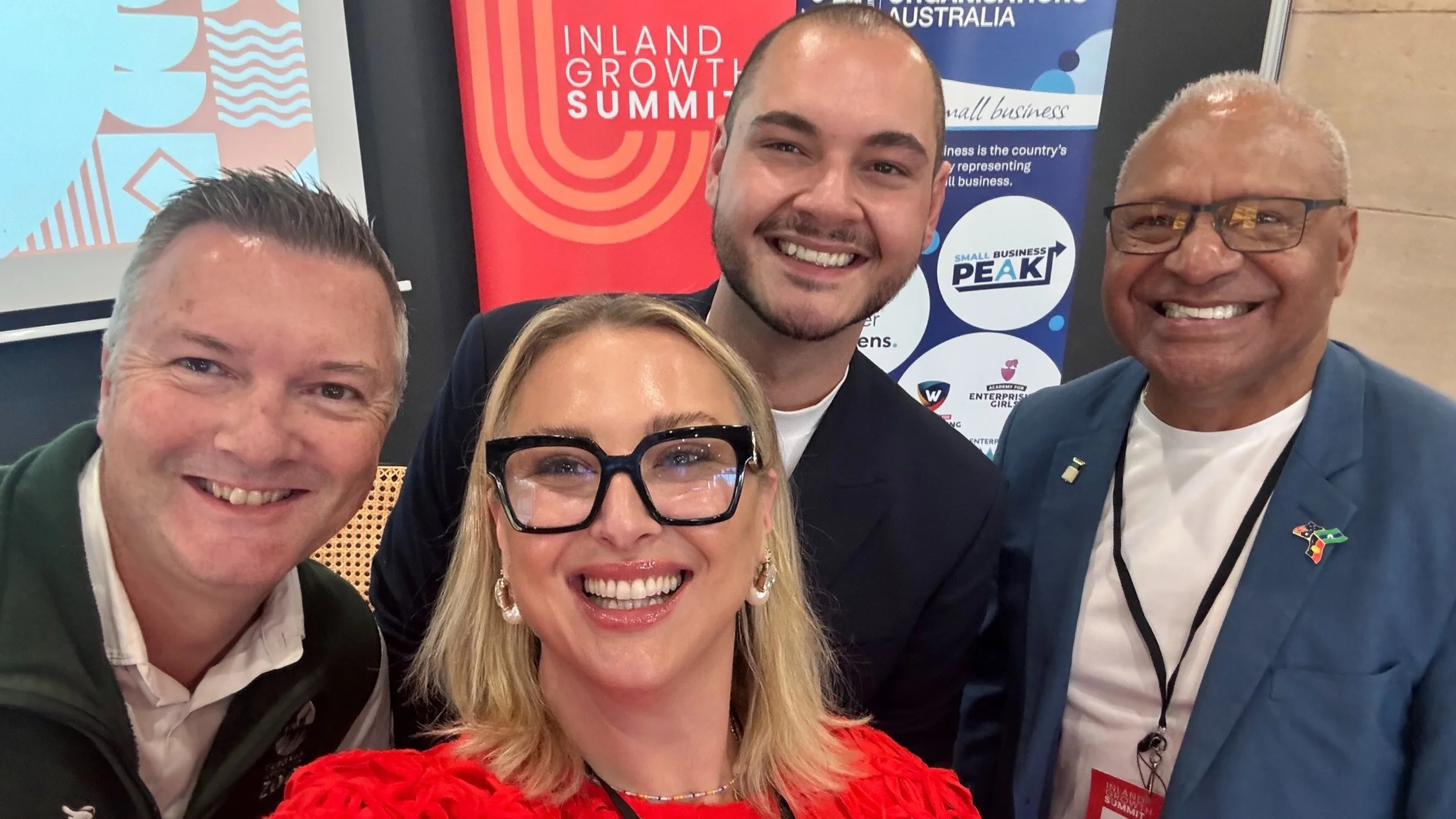
Steve Hinks, Emily Mann, Beau Kassas and Cr. Gerald Power at the Inlands Growth Summit 2026.
A few things revealed themselves while hosting last week's Tourism Panel at the 2026 Inland Growth Summit in Dubbo, and I walked off stage with a million thought bubbles racing through my mind, but one very clear takeaway:
Tourism has a positioning problem.
Not a product problem.
Not a people problem.
A positioning problem.
Here's what I haven't stopped thinking about since:
1. Tourism behaves like infrastructure, but gets treated like entertainment
It drives jobs, investment, and regional growth.
But because it looks like long lunches, wine tastings and good Instagram posts, it's rarely taken as seriously as mining, health or government.
Right up until the revenue becomes non-negotiable and the next budget depends on it.
2. No one's coming to rescue regional tourism
There was no one in the room from Destination NSW or Destination Country and Outback NSW. Not a criticism - just an observation - but one that reinforced something most of us already know:
Regional tourism has always been a self-directed exercise.
The role of state bodies matters. Coordination matters. Advocacy matters. Funding matters.
But the day-to-day work - shaping the story, lifting the standard, creating demand, developing product, world-building comms and strategy - sits with the regions themselves.
Great visitor economies don't happen by accident - the good ones are the ones that just get on with the job.
3. There are a thousand reasons NOT to visit - and none of them change the job
Fuel is expensive.
Cost of living is biting.
The Great Western Highway is a mess.
We actually barely mentioned it because there's nothing to debate.
There will always be friction, but our job is to make it worth it anyway.
4. Locals aren't the audience - they're the engine
We talk about the visitor economy like it exists in isolation from the community.
Spoiler alert: it doesn't.
Locals are your reputation drivers, your distribution system, your word-of-mouth machine.
They're also your biggest accommodation network (just not listed on Airbnb). Ignore them, and you're building on sand.
5. We don't have an authenticity problem - we have an intention problem
“Just be authentic” is poor advice.
Simply showing up online doesn't create demand, and having a great product and a cool story isn't enough anymore.
“Deliver an authentic experience” is a nice idea - until you remember every part of that experience is manufactured.
Every touchpoint is designed.
Every interaction is trained.
Every experience is shaped by systems, processes and decisions made long before a guest arrives.
Authenticity isn't something you are - it's something you build, deliberately, over time and with intention.
And the best destinations aren't reacting to trends - they're shaping behaviour and setting them.
6. Truth-telling isn't a marketing tactic
The room went quiet when Gerald Power spoke.
As the first Indigenous councillor elected to Orange City Council in its 173-year history - and the owner of Indigenous Cultural Adventures - he spoke about jindamulla: truth-telling.
Creating space for First Nations people to tell their stories, in their own words. To say hard things. To invite people in - not perform for them.
Because tourism isn't about packaging culture into something palatable, it's about recognising the value is already there.
7. Tourism isn't a membership program
We've spent years treating tourism like a pay-to-play system and have trained our tourism operators to expect that if you pay your membership fee, you'll get your feature.
But in doing so, we've turned tourism bodies into service providers instead of strategic operators.
If tourism is serious economic infrastructure (and it is), then it needs to be funded, respected and treated like it.
Not as an optional participation activity, but as shared regional responsibility.
Because the benefits don't stop at hotels, cellar doors and cafés - they flow through builders, cleaners, suppliers, tradies - and the entire regional economy.
At some point, the powers that be must decide what they want tourism to be.
A nice-to-have, or something a region can build on?
The conditions aren't getting easier.
The drive might be longer.
The trip might cost more.
The competition for attention is fiercer.
But the brief stays the same: make it worth it.
This piece first appeared in Excessive Consumption - a weekly dispatch on culture, branding, politics and whatever other modern internet brain rot the algorithm has emotionally assigned me that week.
Subscribers get every edition first. The archive opens later.