
THE (SOCIAL MEDIA) DEATH OF CHARLIE KIRK
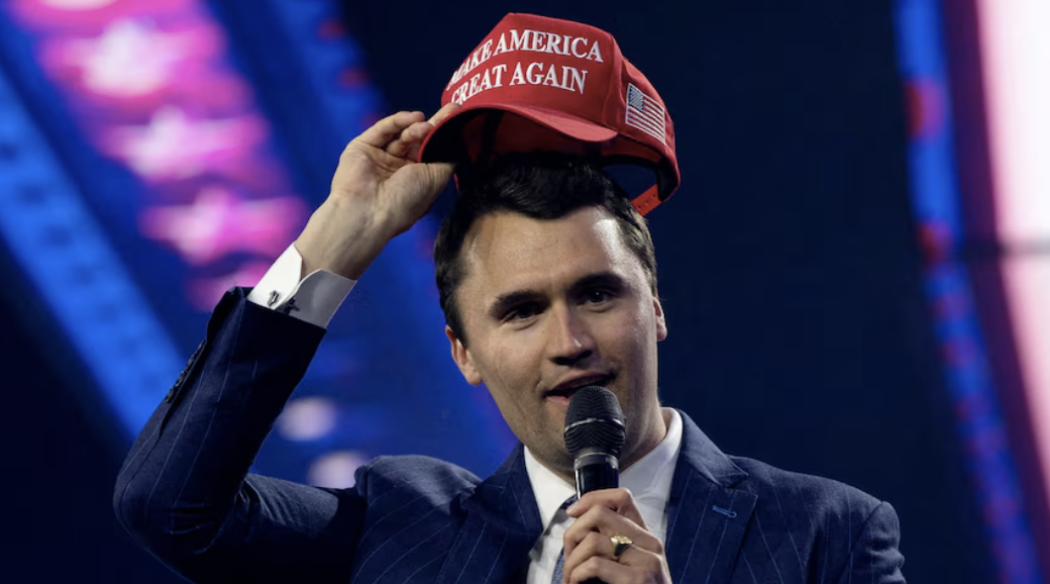
I’ll be honest: I never thought I’d be writing about Charlie Kirk in this newsletter. He’s not my guy, he’s not my politics, and until last week his was a name I’d scroll past at best, roll my eyes over at worst.
But something shifted, and to ignore it would be dishonest.
Sometimes, cultural hinge moments are subtle.
They murmur between the lines of slow churn policy changes and the inch by inch turn of a political debate. They creep up in polling numbers or in surprising election results.
But sometimes they arrive in a single week, like a bullet to the jugular, and in the way we respond in the aftermath.
If you weren’t unlucky enough to see the uncensored snuff porn doing the rounds on the internet (or have been living under a rock for the last week) - MAGA youth influencer (?) leader (?) poster boy (?) Charlie Kirk was speaking on a college campus one moment, bleeding out the next.
It was shocking and senseless. Brutal and gruesome.
And then came the part that made this week feel different: the reaction.
Not just grief, not just debate, but cheering. Celebrations. Posts and comments from everyday “normal” people, openly gloating over his death.
For millions of ordinary people - not policy wonks, not political junkies, not terminally online Twitter bros - just people scrolling their platform of choice, this was a gut punch.
They may not have known who Charlie Kirk was, but they knew this: watching someone die on camera and then seeing friends, neighbours and colleagues laugh about it is wrong. And they got angry.
We often talk about radicalization as something that happens in the shadows of the internet, in dark incel forums or snarky subreddits. But this week, it happened in plain sight, on the feeds of ordinary people.
The violence itself was shocking. The glee that followed was radicalizing.
It told millions of otherwise apolitical people (not just in America, but across the Western world, Australia included) that the world was more dangerous, more divided, and less humane than they’d realized. Because what happens over there doesn’t stay there; it bleeds into our feeds, our politics, our conversations too.
And when people feel unsafe, unheard, or dismissed? They move. Quickly.
Here’s the sting: the left side of politics didn’t just miss this moment, they dismissed it. Instead of sitting with the shock, the tragedy and the fury, too many voices jumped straight to statistics, whataboutism, or petty quips.
The message that landed with ordinary people wasn’t “here’s some context” about who this guy was, why he was shot and why gun control matters.
It was “your feelings don’t matter” - not more than the good guys (left) scoring a win over the bad guys (right), anyway.
And if there’s one surefire way to lose people forever, it’s to sneer at their grief.
Forget political ideology - let’s return to some basic humanity. If we can’t muster basic compassion when someone is killed (even someone we vehemently disagree with) we reveal more about ourselves than about them.
And yes, it’s impossible to ignore the hypocrisy.
That one white man’s death reverberates through the media and sparks outrage across the West, while hundreds of thousands of people in Palestine are being murdered or starved. It’s outrageous, and it tells us everything about whose lives we’ve been taught to count as grievable. Acknowledging that imbalance doesn’t mean Charlie “deserved it” but it does expose the cultural weight we attach to certain bodies and not others.
So to me, this week felt like a hinge moment
Tens of millions of people who never saw themselves as political suddenly became activated.
And they’re not drifting gently left or right. They’re sprinting right.
I HATE to admit it, but deep in my bones I know Charlie’s widow Erika was right when she said (in an entirely stage managed, highly produced and MAGA approved address): “You have no idea what you have unleashed”.
And it’s frightening, but also wholly unsurprising.
Because Charlie Kirk didn’t just die. He became something else: a MAGA martyr. A sacrificial lamb to the slaughter, and his death may galvanise this movement more than any of his speeches, ‘Prove Me Wrong’ viral videos or campus tours ever did.
And what’s maybe even more shocking (but definitely less surprising) is how quickly it’s all been turned into content. Erika Kirk’s posts - manicured hands clasping a corpse, a glam carousel on a Wednesday morning, soundbites about Charlie being “on a business trip with Jesus” so she can pay for the family’s blueberry budget.
It’s morbidly surreal.
She’s mic-ed up, kissing his cold, dead hands, speaking to a crowd, and it’s all being uploaded in real time. We’re watching grief staged, captioned, tagged, and broadcast as if it’s campaign collateral (because it is).
This is grief as production and it’s shocking in its choreography.
And for MAGA, it’s ready-made ammunition (pun intended).
The mourning has been weaponised (pun intended), and it’s already been filmed, cut, edited, and posted into mythology.
And the irony is: it isn’t really about Charlie Kirk. And that’s the part we’d be foolish to underestimate - it's not about the man, but what his death now represents.
I’m not writing this as a Kirk fan. I’m writing this as someone who believes ignoring reality is dangerous. The reality is: millions of people just had their worldview shaken.
We don’t have to agree with their conclusions to acknowledge their experience.
We don’t have to abandon our values to admit that cheering or hand-waving the horror away is not just morally wrong, it’s politically and strategically suicidal.
This piece first appeared in Excessive Consumption - a weekly dispatch on culture, branding, politics and whatever other modern internet brain rot the algorithm has emotionally assigned me that week.
Subscribers get every edition first. The archive opens later.