
A STROKE OF GEOGRAPHICAL LUCK
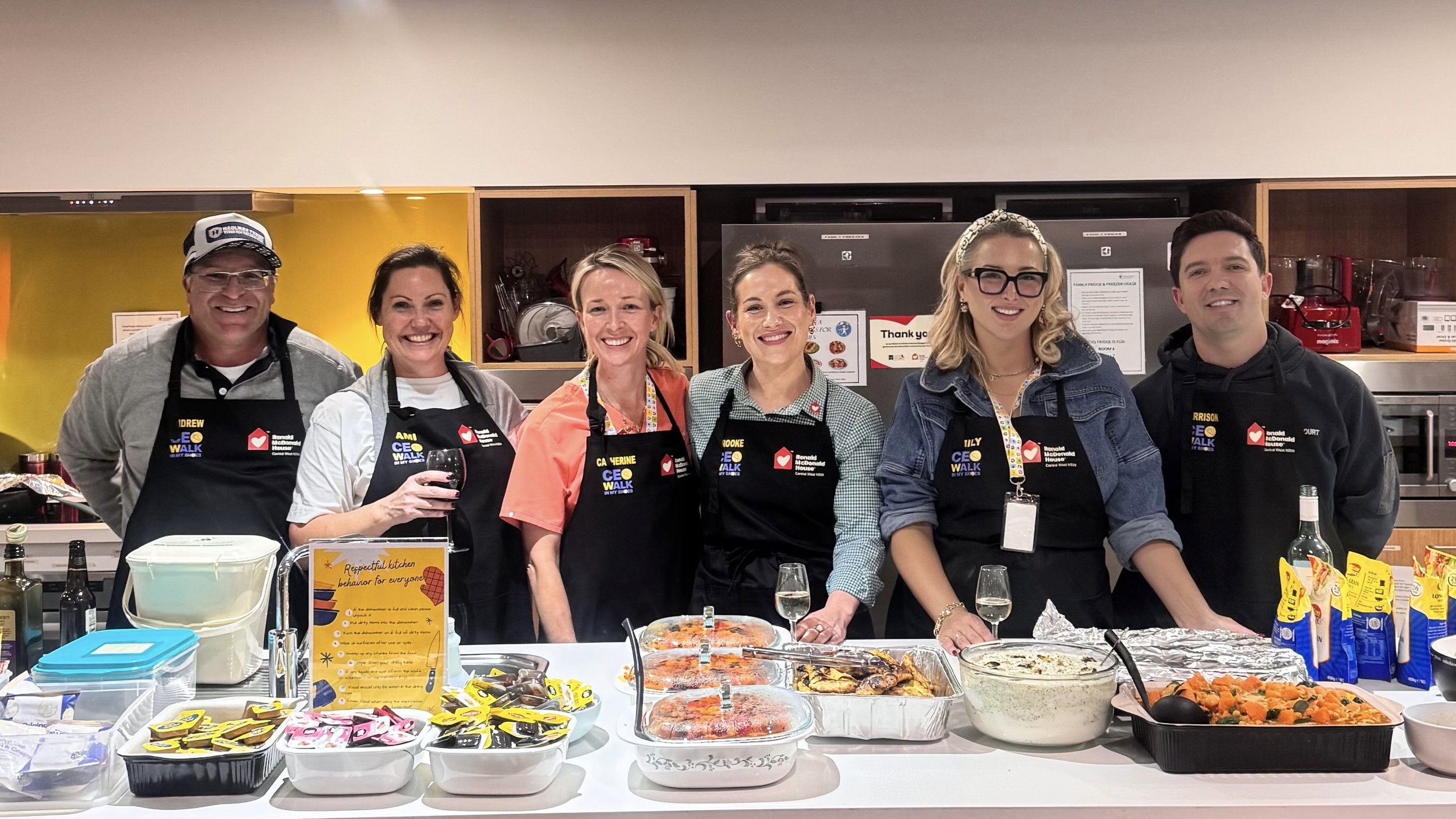
CEO Walk In In My Shoes 2026
Ronald McDonald House doesn’t feel tragic. Not in the way you expect, anyway.
It feels weirdly normal.
There are family photos blu-tacked onto bedroom walls. Half-drunk cups of tea abandoned in the sink. Someone folding tiny socks in the laundry. Kids playing board games in the lounge room. Parents making toast. People just existing in the strange limbo between hospital rounds and good news and bad news. It’s a lot of hope and waiting.
And it got to me.
I went into the CEO Walk In My Shoes experience thinking I was there to help those families. Observe those families. To understand their reality, and the impact Ronald McDonald House Central West has.
To witness something outside myself.
I mean, I understood it conceptually…
✅ Accommodation for regional families.
✅ Meals.
✅ Support.
✅ Community.
The broad and abstract strokes.
But understanding something intellectually and understanding it emotionally are two very different things, and driving home on Friday afternoon, exhausted and scrambling to make school-pick up on time, I suddenly had this horrible full-body realisation that if it weren’t for a stroke of geographical luck - I am those families.
When my son was ten months old, he spent ten days in the paediatric ward at Orange Hospital with an especially nasty case of bronchiolitis. Ten days of oxygen monitors, nasal cannulas, sleeping half upright in chairs, listening to other children cry through walls at 2am and on the verge of combustion every time a doctor used the phrase “we’ll keep an eye on him” or “let's see how he goes tomorrow”.
At the time, I never once thought about accommodation - I didn’t have to. Because I got to drive home. I got to swap shifts with my husband. I got to sleep in my own bed occasionally (once) and shower in my own bathroom and pick up clean, extra clothes without a second thought.
We had meals delivered by friends and family. We could order takeaway from our favourite Thai place. We could still grab a coffee from our regular spot in town. The night-shift nurse was a friend of a friend.
And it was still the most traumatic thing we’ve been through.
But we coped.
Not due to resilience - but due to geography.
Sitting inside Ronald McDonald House this week and listening to stories from families who had travelled from Forbes, Condobolin, Queanbeyan, Bathurst and beyond - I realised how easily life redraws the line between “us” and “them.”
There is no “them”
There are just parents trying to survive the worst days, weeks and months of their lives while pretending everything is okay for their child.
The House exists to remove one layer of impossible from that experience. A bed. A meal. A laundry. A kitchen. Somewhere to exhale for five minutes without fluorescent hospital lighting humming above your head and the vitals monitor screaming at you.
It’s not luxurious (though it is really nice - I’ve stayed in far, far worse hotels).
But it is emotional infrastructure - the kind that keeps families functioning while everything else falls apart.
Once you understand that these aren’t “other people’s families” - once you understand they are our families, under slightly different circumstances - it becomes impossible to unsee and the emotional distance I’d unconsciously created between “those families” and my own family collapsed completely.
That’s the thing regional healthcare conversations often miss, because we talk about healthcare infrastructure clinically.
Beds.
Funding.
Staffing.
Services.
But we rarely talk about proximity.
We talk constantly about roads and rail and housing and healthcare “access” in regional Australia, but Ronald McDonald House might legitimately be one of the most important pieces of health infrastructure in the Central West - supporting thousands of families without fanfare while the rest of us scroll past charity logos assuming someone else needs them more and thinking “poor them”.
Over and over again, I heard versions of the same sentence: “We didn’t think we were the kind of family who should stay here”…as though needing help requires reaching some invisible threshold of tragedy first.
But illness doesn’t organise itself hierarchically for the convenience of our guilt or our ego.
A child needing surgery matters.
A teenage mental health admission matters.
A premature baby matters.
A virus admission matters.
One terrifying overnight stay matters.
Sometimes support is needed for six months, and sometimes one night changes everything.
Both matter.
So here’s what has stayed with me most after leaving:
Not the statistics.
Not the facilities.
Not even the stories.
The realisation that almost all of us are far closer to “those families” than we’d ever like to admit.
This piece first appeared in Excessive Consumption - a weekly dispatch on culture, branding, politics and whatever other modern internet brain rot the algorithm has emotionally assigned me that week.
Subscribers get every edition first. The archive opens later.