
A VERY META MET
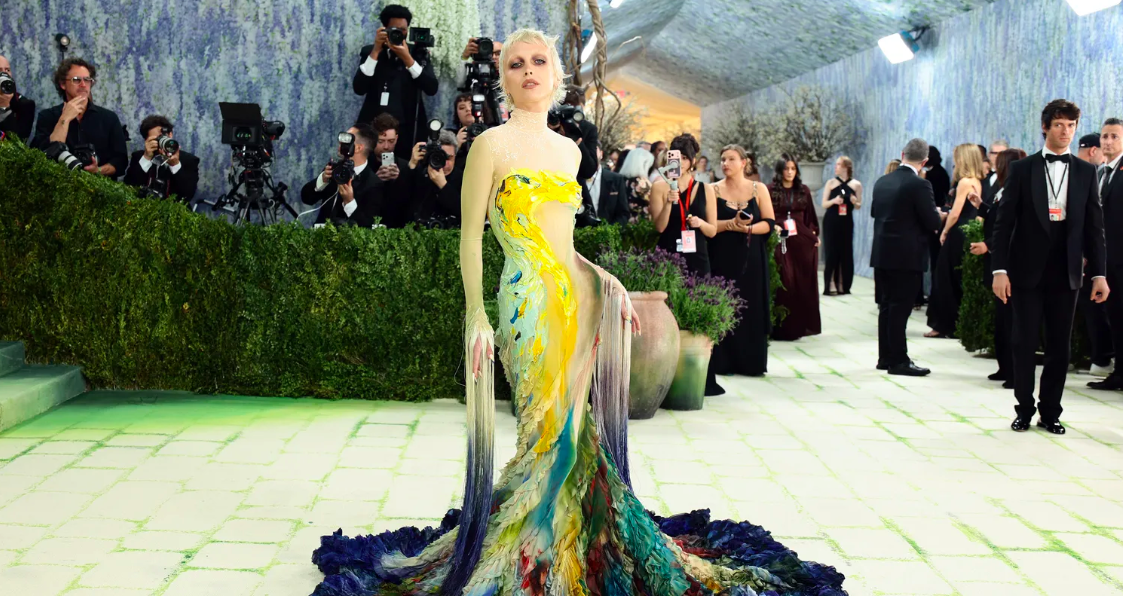
Emma Chamberlain at The META Gala 2026. Photo: Dimitrios Kambouris/Getty Images/The Met Museum/Vogue
For years the Met Gala has felt like the last true monocultural event left standing.
Fashion's night of nights.
A place where celebrities (further) transformed into mythology and the mere mention of thier name on the rumoured guest list (let alone actually attending) was PR GOLD.
This year?
It felt like a billionaires AGM with better lighting and (borderline) better fashion.
Not because the outfits were universally bad (although many were horrible) or because I expect every attendee to emerge from a chrysalis dressed as a literal chandelier.
The 2026 problem felt bigger than fashion.
The illusion broke.
And it was a major ICK from me.
From the tech billionaires, the sponsorship deals, the influenzafication of celebrity culture and the overwhelming sense that half the guest list had been approved by a silicon-valley boardroom, the Met Gala stopped feeling culturally untouchable and started feeling morbidly transactional.
The arrival of Jeff Bezos and Lauren Sánchez Bezos as lead sponsors and honorary co-chairs became the defining symbol of it all over the past week. Reports have suggested the couple contributed somewhere between USD$6-10 million to the event, fuelling criticism that fashion's most exclusive night was beginning to resemble a billionaire donor dinner…with archival couture attached as an afterthought.
And like yes, obviously - the Met Gala has always been about wealth, status and access. But historically, the event still managed to maintain the illusion that creativity sat slightly above commerce.
This year, in my eyes, the commerce swallowed the creativity whole.
Nothing encapsulated that better than Mrs. Sánchez Bezos arriving in custom Schiaparelli inspired by John Singer Sargent's infamous Madame X portrait. The reference itself was clever enough: a painting once considered scandalous because of a fallen dress strap, now reinterpreted by one of the most publicly scrutinised women in modern celebrity culture.
It had real potential.
But the execution landed with an extraordinary level of…mid.
Even more awkwardly, multiple other attendees - including Claire Foy - also arrived referencing Madame X.
LOL - imagine buying your way into the world's biggest fashion platform to the tune of a cool $10 mil…only to discover someone else interpreted the exact same muse more interestingly than you did. DEAD ☠️
As they say - money can't buy taste.
It transformed what should have been elusive and exclusive into something oddly algorithmic - like luxury fashion moodboarding itself into Pinterest sameness.
So much of this year's Met felt driven by partnership obligations, sponsorship visibility and strategic brand alignment rather than genuine spectacle.
Kylie and Kendall Jenner arrived in oddly similar naked-sculpted looks. One Schiaparelli, the other tied to a Gap collaboration (and SKIMS - question mark?) - yet ironically, Kylie looked more convincing as a high-fashion figure than Kendall, who is an actual real-life supermodel.
And so, all I saw was that modern celebrity fashion is increasingly fashion-as-cultural-capital, but sadly not as creativity.
And don't even start me on Blake Lively's arrival fresh from court, or Beyonce looking old, tired and being totally out-mogged by daughter Blue Ivy.
I guess what I'm pondering is - is the Met Gala losing cultural relevance…or has the internet simply made us too aware of how the sausage gets made?
The Met Gala only works when it feels mystical. Impossible. A place where culture is shaped by glamorous weirdos in impossible garments.
But this year, I could see the invoice behind everything.
The sponsorships. The donor politics. The moneyed access. The PR strategy. The exclusivity deals. The brand obligations. The networking.
And it's either an odd coincidence or culturally prescient that the resurgence of conversations around The Devil Wears Prada 2 feels so telling right now.
For years, Miranda Priestly (AKA Anna Wintour) represented everything people claimed to hate about fashion and media gatekeeping: exclusivity, elitism, impossible standards, and old-world taste authority.
But in the algorithm era? We do thing differently.
And once Anna's in her Global Director Era? Even more so, apparently.
While the old fashion world could be brutal, it was at least driven by people with distinct points of view. Editors. Stylists. Tastemakers. Eccentrics. Creatives. Humans with opinions.
WORLD BUILDERS.
Now? Culture increasingly feels flattened by sponsorships, metrics, partnerships and algorithmic sameness.
And that's what made this year's Met Gala feel so bloody hollow.
I'm not saying Met Gala fashion hasn't stopped being beautiful (some of it absolutely was), but this year at least, it stopped feeling surprising.
And the replacement was sponsorship deals, AI slop and billionaires with cultural side quests.
BORING.
But FWIW - Emma Chamberlain has my Best Dressed vote, hands down.
This piece first appeared in Excessive Consumption - a weekly dispatch on culture, branding, politics and whatever other modern internet brain rot the algorithm has emotionally assigned me that week.
Subscribers get every edition first. The archive opens later.